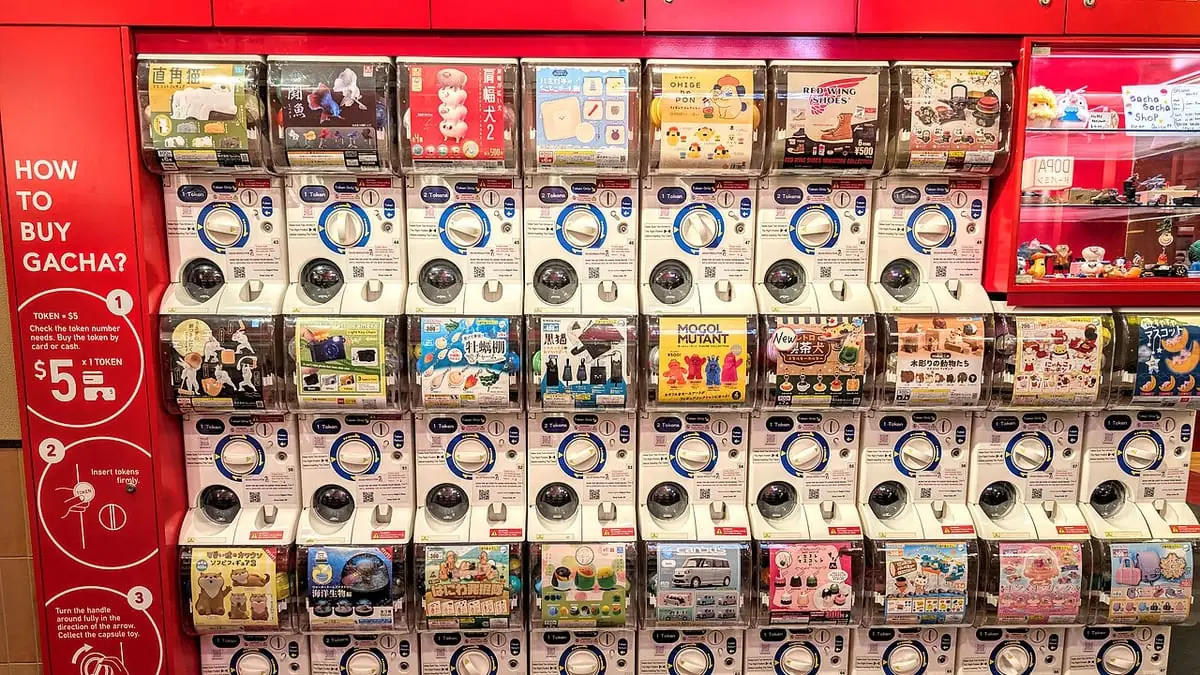
A capsule-toy machine tells you what it is by standing there. You put money in, a handle turns, and something you did not choose comes out. Nobody has ever had to be told that the machine is random.
The same purchase inside a phone game is much harder to see coming, and in February 2026 the UK's advertising regulator decided that was a problem worth an enforcement notice.
What the ASA actually asked for
The Committee of Advertising Practice issued the notice through the Advertising Standards Authority on 26 February 2026. It covers listings on the App Store and Google Play for games containing loot boxes that can be bought with real money, or with a virtual currency obtainable only by paying. The core of it is one sentence: consumers must know, before they buy or download a game, whether it contains loot boxes.
Three things about the notice are worth reading closely, because they are what makes it more demanding than it first sounds.
- It asks for words, not a label. The notice gives examples — “contains loot boxes”, “includes random-item purchases”. Plain English on the listing itself.
- It asks for prominence. The disclosure should be placed where it will be seen quickly, the notice suggesting the top of the “About this game” section or its equivalent, rather than somewhere a reader would have to go looking.
- It rules out the generic line. “Offers in-app purchases”, on its own, is not treated as enough.
The notice gave until 26 May 2026 to bring listings into line, and said that active monitoring would begin on that date, followed by targeted enforcement action where needed.
So what do the listings say?
That is a checkable question, so here is the check. Apple's lookup service returns the description text of a listing for a chosen storefront. Reading the UK storefront for the games in our directory, and searching each description for loot-box or random-item wording, produces the table below.
The second column is Apple's own age-rating descriptor — the machine-readable “Loot Boxes” line covered in the App Store already tells you which games sell loot boxes. The third is whether the description text, the prose a publisher writes, contains wording of the kind the notice describes.
| Game | Apple “Loot Boxes” descriptor | Random-item wording in the description |
|---|---|---|
| AFK Journey | Yes | No |
| Brawl Stars | No | Yes |
| Call of Duty: Mobile | Yes | No |
| Clash of Clans | No | Yes |
| Clash Royale | No | Yes |
| Genshin Impact | Yes | No |
| Honkai: Star Rail | Yes | No |
| MARVEL SNAP | Yes | No |
| MONOPOLY GO! | Yes | Yes |
| PUBG MOBILE | Yes | Yes |
| Pokémon GO | No | No |
| Pokémon TCG Pocket | Yes | No |
| Roblox | Yes | No |
| Wuthering Waves | Yes | No |
| Zenless Zone Zero | Yes | No |
Eleven of the fifteen carry Apple's descriptor. Five have wording in the description. Only two — MONOPOLY GO! and PUBG MOBILE — have both.
The three that say it without being told to
The interesting rows are the top three. Brawl Stars, Clash of Clans and Clash Royale do not carry Apple's “Loot Boxes” descriptor at all — and all three say it in prose anyway, in a standing line near the top of the description explaining that some items can be bought for real money, random items included.
That combination is the clearest evidence in the table that the two disclosures are separate machinery. Apple's descriptor comes from a developer's answers to an age-rating questionnaire. The description is marketing copy the publisher writes. A game can do one, both or neither, and reading only one of them gives you an incomplete picture of the same game.
PUBG MOBILE is the other end of the same point. Its description does carry the wording — in the last line of the listing, after everything else. Present, and about as far from the top of the page as a sentence can be.
One listing is not there at all
Mobile Legends: Bang Bang is in our directory and is missing from the table, because the App Store record we track for it does not return on the UK storefront. Store listings are per-region, and an app being absent from one country's store is ordinary rather than sinister — but it is a reminder that everything above describes UK listings specifically, and that the same game can present differently from one country to the next.
What to do with this if you are the one paying
The practical upshot has not changed much: the store page is worth two minutes before you install, and it now has two places to look rather than one.
Read the description properly
Including the last paragraph. The random-item line, where a publisher includes one, is frequently either the first thing after the pitch or the very last line before the legal text.
Expand the age rating
Apple's descriptors sit behind it, and “Loot Boxes” is one of them. It is a yes-or-no signal and it is independent of anything the description says.
Treat neither as complete
A game with no descriptor and no wording has not told you it is free of randomised purchases. It has told you nothing.
And if the disclosure is there, the numbers behind it should be too — both stores require the odds to be published before a purchase. Gacha odds explained covers what a published rate actually promises you, which is less than most people assume.
How we worked this out
The regulator's requirements are taken from the enforcement notice published on the ASA's own site, read on the access date in Sources. The listing column is a plain text search of the description field returned by Apple's iTunes Lookup API for the United Kingdom storefront on the same date, for the games in the PhonePlayers directory. That is a narrow test: it can only see the description text Apple's API returns, it cannot see Google Play, and it cannot judge whether a disclosure is prominent, which is the thing the notice actually asks for. No listing here is described as compliant or non-compliant, because this method cannot establish either.
Sources
- Enforcement Notice: Disclosure of loot boxes in app stores (opens in a new tab) — Advertising Standards Authority / Committee of Advertising Practice (accessed )
- Apple iTunes Lookup API — the games in the PhonePlayers directory, UK storefront (opens in a new tab) — Apple (accessed )
- App Review Guidelines, section 3.1.1 (opens in a new tab) — Apple (accessed )