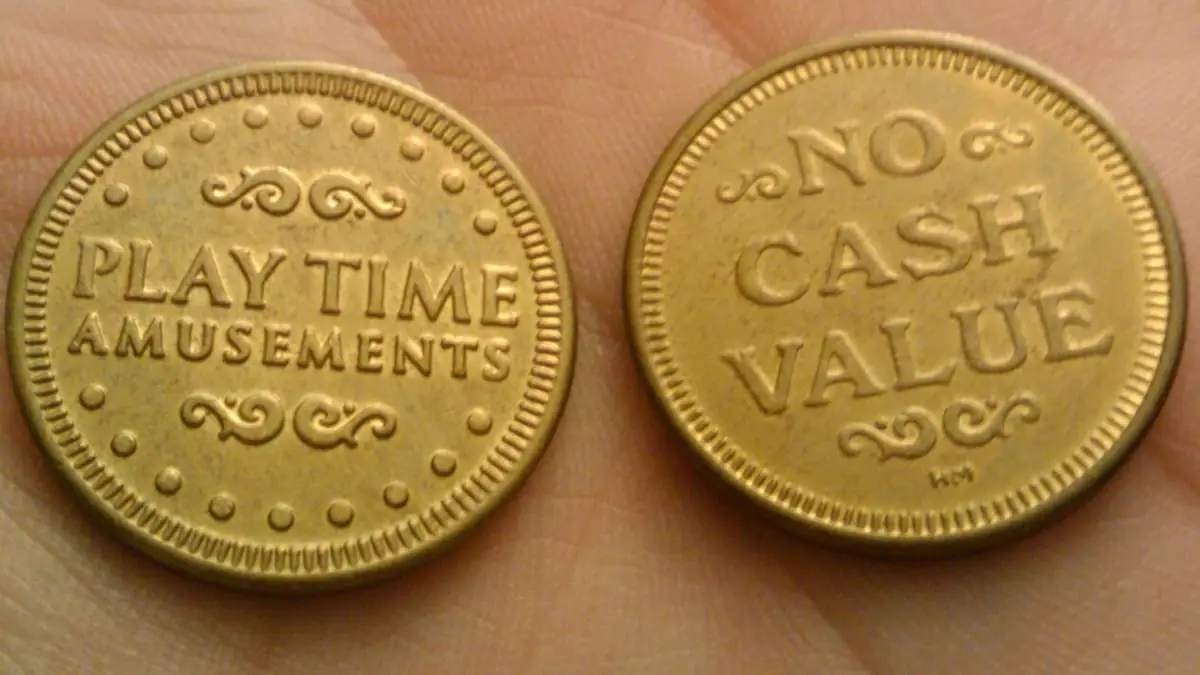
An arcade token has its terms stamped into the metal. No cash value. You know what you handed over at the change machine, you can see how many tokens came back, and the slot on the cabinet takes them one at a time in front of you.
A pouch of gems is the same trade with the arithmetic removed. The pouch has a price. The thing you eventually spend the gems on does not — not in money, anyway. Somewhere between those two screens the cost of the purchase stops being a number you can read and becomes one you would have to work out.
In March 2025 the consumer protection authorities of the EU and EEA wrote down what they think should happen instead. The document is eight pages long, it is addressed to the games industry rather than to players, and almost nobody it is really about has read it.
What the document actually is
The Consumer Protection Cooperation Network — the CPC Network — is the group of national authorities that enforce EU consumer law, working under the Commission's coordination. On 21 March 2025 it published Key Principles on In-game Virtual Currencies, prepared under the lead of the Netherlands Authority for Consumers and Markets and the Norwegian Consumer Authority.
It contains seven principles. Each one names the law it is reading from: the Unfair Commercial Practices Directive, the Consumer Rights Directive and the Unfair Contract Terms Directive. That is the important structural point — the network is not proposing new rules for games, it is saying which existing rules it thinks already apply to them.
It also has a defined scope. It covers currencies bought with real-world money and then used to pay for things inside the game. A currency you can only earn by playing, and cannot buy, is outside it — as are cryptocurrencies, which the document excludes explicitly.
Principle one: put the real price next to the gem price
The first principle is that price indication should be clear and transparent, and its reasoning is the one at the top of this article. The network's position is that the price of in-game content is material information, that a consumer needs it in real-world money to make an informed decision, and that a virtual currency adds a layer which makes the true cost harder to assess.
The action points under it are more specific than the headline suggests:
- When currency or content is offered for sale, its price in real-world money should be clearly and prominently displayed.
- Where one in-game currency is offered in exchange for another that you can buy with money, that exchange should carry a real-money price too.
- Where content is bought with a currency that can be bought — directly or through a second currency — the real-money price should be shown, based on what you would have to pay in full for the required amount, without quantity discounts or promotional offers.
- The fact that a currency can also be earned through gameplay does not change the price of the item. The document asks for a figure that is an objective reference for the real-world cost, however the player happens to have obtained the means to pay.
That third point is the one with teeth. Most games sell currency in tiers where the per-unit rate improves as the pack gets bigger, which means an item has no single money price — it has a range, and the flattering end of that range is the one a publisher would rather quote. The network's answer is to take the unflattering end: the full price, no bulk discount.
Principles two and three: the shop-screen patterns it names
The second principle asks that practices obscuring the cost of content be avoided, and it lists two:
- Offering and mixing several different in-game currencies within one game for buying content.
- Requiring several exchanges between currencies before a purchase can be made.
The third asks that practices forcing players to buy currency they do not want be avoided, and lists two more:
- Offering currency only in bundles that do not match the value of the things it buys.
- Denying players the ability to choose the specific amount of currency they buy.
Read together, those four describe the leftover-balance problem exactly: pack sizes that never quite fit the price of anything, so that every purchase strands a remainder which is only useful as a deposit on the next one. The network's framing is that designing a game so players spend more real money on currency than the content they selected requires is a practice distorting economic behaviour, not a pricing quirk.
The one most players will not know about: withdrawal
Principle five concerns the right of withdrawal — the 14-day cooling-off period EU consumer law attaches to distance purchases. Digital content can be exempted from it, but the document sets conditions: you must give express consent to begin using the content immediately and acknowledge that you are giving up the right, that consent and acknowledgement can be collected in the same click as the purchase but has to be separate from it, and the trader has to send you confirmation of the contract including that consent.
The practices it lists as ones to avoid are blunter than the principle:
- Exempting the purchase of in-game currency from the right of withdrawal at all — the document's position is that a currency is not itself digital content, so the digital-content exemption is not the right instrument for it.
- Denying withdrawal within 14 days for currency that remains unspent.
- Denying withdrawal on content bought with in-game currency on the grounds that no money changed hands at that moment.
Terms of service, and the value of what you bought
Principle six asks for contract terms in plain and clear language, reading from the Unfair Contract Terms Directive, and its list of terms to avoid reads like an annotated licence agreement. Among them: terms letting a trader unfairly cease, modify or withdraw content or currency you have already bought; terms letting it remove a purchasable feature you could reasonably have expected to remain; terms granting it the right to unilaterally modify the value of the in-game currency; and terms allowing accounts to be banned or suspended with no way to contest the reason.
The currency-revaluation one is worth sitting with. A game that changes what a gem buys has changed the price of everything you already paid for, after you paid for it, and the network's view is that a term reserving that right is unfair rather than routine. The related question of what becomes of a purchase when the game itself ends is one we have covered separately in what happens to your account when a mobile game shuts down.
Children, and the players the industry calls whales
The seventh principle is about vulnerability, and it makes two claims that are unusually direct for a document of this kind.
The first is about all of us: the document states that using an in-game currency psychologically disconnects the act of spending from real-world money for all players, that this leads to higher expenditure, and that it is therefore a commercial practice likely to materially distort economic behaviour. Not a design convenience with a side effect — the effect is the reason the mechanism is named in the first place.
The second is about children, and it closes a familiar escape route. Any game not exclusively intended for an adult audience should expect a significant part of its player base to be under 18, and traders should adapt their practices to the players a practice can actually reach rather than to the intended target group. Age gates and parental controls do not limit that responsibility. The document also asks for parental controls with age-appropriate defaults — including, where a game is not adults-only, real-money spending being disabled by default.
Then there is the passage on high spenders. Players willing to spend excessive amounts may be considered vulnerable because they are likely to struggle with impulse control or gambling disorders, so a business model built on targeting them is a model targeting a vulnerable group — and the fairness of its practices is to be assessed against a stricter threshold. That is a regulator saying the quiet part about whale-driven monetisation in a published document.
Does any of it have force?
The principles arrived on the same day as an enforcement action, which is not a coincidence. Following a complaint by the Swedish Consumers' Association, the CPC Network adopted a common position on Star Stable Entertainment AB over the game Star Stable Online, identifying practices it found in breach of EU consumer law: direct appeals to children in advertising urging them to buy or to get adults to buy for them, time-limited pressure techniques, a lack of clear information adapted to children about buying and using in-game currency, and a failure to ensure influencers disclosed commercial content. The company was given a month to respond and to propose commitments.
Michael McGrath, the Commissioner for Democracy, Justice, the Rule of Law and Consumer Protection, framed the day's announcements around children: it is, he said, "crucial to ensure a safe online environment for consumers, particularly children".
The Commission then hosted a workshop on 3 June 2025 for companies operating in the EU to present concrete steps towards implementing the principles, and said the CPC Network would decide on any follow-up measures based on those discussions. Its press release also states that the Commission will continue to examine these topics in the context of forthcoming consultations on the Digital Fairness Act. What that act will eventually say about virtual currencies is not something anyone can source today, and this article does not try.
Why read a regulator's guidance at all
Because it is a good checklist, and it did not come from a games site. Seven principles, written by people whose job is to look for the point at which a purchase stops being informed, applied to the exact screen you see when a game asks for money.
You can hold a shop screen up against it in about a minute. Is there a money price anywhere near the gem price? How many currencies are in play, and do any of them convert into each other? Does the smallest pack that covers this item leave a remainder? Would you make this purchase if the price tag were in euros or pounds?
That last question is the whole document, compressed. If the answer changes when the currency does, the currency was doing something.
For the neighbouring questions: gacha odds explained covers what published pull rates mean once you are spending, and how to spot a pay-to-win mobile game before you install covers the signals visible on a store page before any of this becomes your problem.
How we worked this out
The seven principles, their legal bases and the lists of action points and practices to avoid are taken from the CPC Network's own document, read in full on the access date in Sources. The enforcement action, the authorities that led the work and the Digital Fairness Act sentence come from the European Commission's press release of 21 March 2025; the follow-up workshop from the Commission's news item of 3 June 2025; the status of the Star Stable case from the Commission's page on coordinated actions. No claim is made here about whether any particular game meets the principles: that judgement belongs to the national authorities and the courts, which is what the document itself says. No game's prices, bundle sizes or exchange rates appear anywhere in this article.
Sources
- The Consumer Protection Cooperation Network's Key Principles on In-game Virtual Currencies (PDF) (opens in a new tab) — Consumer Protection Cooperation Network (accessed )
- Commission and national authorities take action to protect children from harmful practices in video games (IP/25/831, PDF) (opens in a new tab) — European Commission (accessed )
- The European Commission hosts stakeholders' talks on the application of the CPC Network's Key Principles on In-Games Virtual Currencies (opens in a new tab) — European Commission (accessed )
- Coordinated actions: social media, online games and search engines (opens in a new tab) — European Commission (accessed )