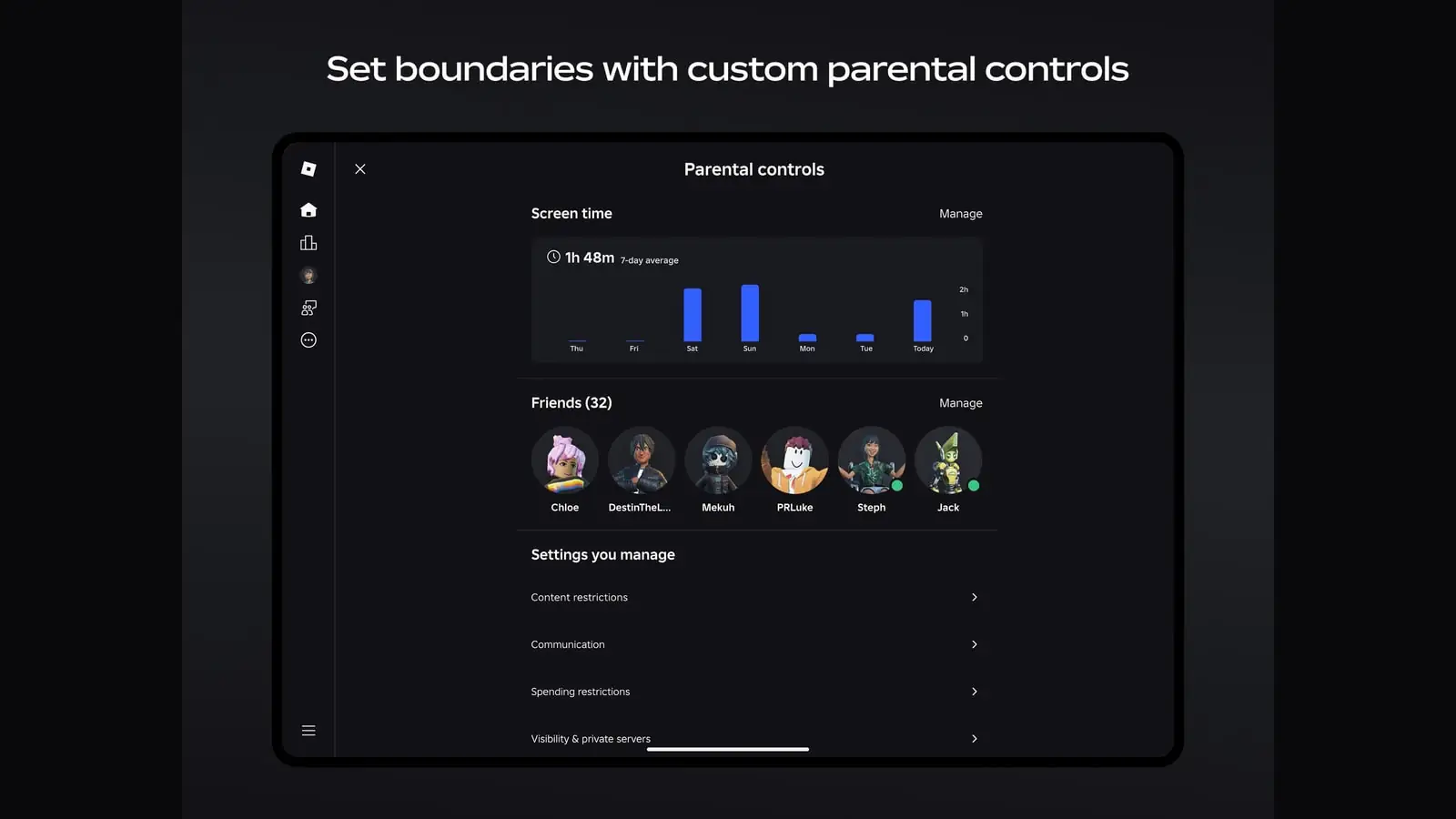
There is a new line in the age-rating box on App Store listings, and it is the first one Apple has added that is about other people rather than about content. It reads Social Media, and a game that carries it cannot be rated below 13+.
Since this month, answering the question is not optional. Apple told developers in June that from September 2026 they would have to state whether an app or game has social media capabilities in order to submit anything at all — a new app, an update, or a build for notarisation on an alternative app marketplace in the EU.
What Apple means by social media
The definition is narrower than the phrase suggests, and the whole article turns on it. A social media capability, in Apple's wording, is the ability to redistribute, amplify or interact with user-generated content "through a social feed or similar discovery method" that visibly spreads content to many users. Feeds with views, likes, comments and shares are the example Apple gives.
Read that against what most mobile games actually have. A clan chat, a squad voice channel, a direct message to somebody on your friends list — none of those spreads anything to many users, and none of them is a feed. They are covered by a different line, and that line does nothing to the rating.
| Line on the listing | Lowest rating it allows |
|---|---|
| Social Media | 13+ |
| Social Media Disabled for Users Under 13 | 13+ |
| Messaging and Chat | 4+ |
| User-Generated Content | 4+ |
| Age Assurance | 4+ |
| Parental Controls | 4+ |
So a game can let strangers talk to you all day and still sit at 4+ as far as this questionnaire is concerned. It is a feed that moves the number.
What the sixteen games we cover declare today
These columns were read from the App Store product pages on 18 September 2026. They record what each developer has declared, which is not the same as what each game contains — a point worth holding on to before reading anything into a blank cell.
| Game | Rating | Social Media | Messaging and Chat | User-Generated Content |
|---|---|---|---|---|
| Roblox | 13+ | Yes | Yes | Yes |
| Genshin Impact | 13+ | Yes | Yes | Yes |
| PUBG Mobile | 13+ | Yes | Yes | Yes |
| AFK Journey | 13+ | — | Yes | Yes |
| Clash of Clans | 13+ | — | Yes | — |
| Brawl Stars | 13+ | — | Yes | — |
| Honkai: Star Rail | 13+ | — | Yes | — |
| Zenless Zone Zero | 13+ | — | Yes | — |
| Wuthering Waves | 13+ | — | Yes | — |
| Mobile Legends: Bang Bang | 13+ | — | Yes | — |
| Marvel Snap | 13+ | — | Yes | — |
| Call of Duty: Mobile | 18+ | — | Yes | — |
| Clash Royale | 9+ | — | Yes | — |
| Pokémon GO | 9+ | — | — | — |
| Pokémon TCG Pocket | 9+ | — | — | — |
| Monopoly GO! | 9+ | — | — | — |
Thirteen of the sixteen declare a way to talk to other players. Three declare a feed. Ten of them, in other words, let you communicate with strangers and are not social media by the definition Apple has just made mandatory — including Clash Royale, which carries the chat line and sits at 9+.
Why Apple wanted the answer
The declaration is not really about ratings. It feeds Time Allowances, the parental control Apple shipped on 14 September 2026 with iOS 27, iPadOS 27 and macOS 27, which lets a parent set separate daily limits for Entertainment, Games and Social Media.
The load-bearing detail is which bucket a game lands in. Apple assigns the Social Media category from the capability declaration and not from the category a developer picked in App Store Connect — so a game that declares a feed is counted against a child's social media time, not their games time, whatever it calls itself in the store. That is the part a parent setting these limits this month will notice first.
What the label does not tell you
- It is the developer's own answer. Apple sets the definition and the questionnaire; the developer fills it in. Nothing on the listing is an independent finding, and nothing here tests whether any of these declarations is right.
- A blank is not proof of absence. A missing line means the developer did not declare the capability. That is all it means, and it is the same caution the loot-box line in the same box deserves.
- 13+ is a floor, not an explanation. The rest of the questionnaire can push a rating higher, so a 13+ game is not 13+ because of a feed. Call of Duty: Mobile is 18+ and declares no feed at all.
- It says nothing about moderation. The line records that a feed exists. How it is filtered, who sees what, and what happens to a report are not questions this questionnaire asks.
Reading it yourself, in four taps
Open the game's App Store page
From search, or from a link. The App Store app and the web listing show the same box.
Scroll to Information
Below the screenshots and the description, past the ratings and reviews.
Open the Age Rating row
The row shows the rating — 4+, 9+, 13+, 16+ or 18+ — and expands to the descriptors behind it.
Read the group headed Contains
Apple groups the descriptors as In-App Controls, Frequent, Infrequent and Contains. Social Media, Messaging and Chat and User-Generated Content appear under Contains.
It takes about ten seconds, and it answers a question that is otherwise guesswork: not whether a game is violent, but whether the thing your child is installing has a room full of strangers in it, and whether that room broadcasts.
How we worked this out
The rule, the definitions and the rating floor attached to each descriptor were read from three Apple documents on the access date in Sources: the Time Allowances developer announcement of 8 June 2026, the age-rating questionnaire note of 9 July 2026, and the App Store Connect reference page listing every age-rating value and capability descriptor. The per-game columns were read the same day from the sixteen App Store product pages in the PhonePlayers directory, recording the age rating shown in the Information section and which capability lines appear under it. Ratings come from the product pages rather than the iTunes Lookup API, which still answers with Apple's retired scale. Nothing here was established by playing any of these games or by opening any of the features described, and no claim is made about whether a developer's declaration is accurate.
Sources
- Introducing Time Allowances (opens in a new tab) — Apple (accessed )
- Age rating questionnaire now includes social media questions (opens in a new tab) — Apple (accessed )
- Age ratings values and definitions — App Store Connect Help (opens in a new tab) — Apple (accessed )
- App Store product pages — the sixteen games in the table (opens in a new tab) — Apple (accessed )
- Apple's new child safety features now available (opens in a new tab) — Apple (accessed )
- Declared Age Range — Apple Developer Documentation (opens in a new tab) — Apple (accessed )